

Building the Quantum Workforce of Tomorrow
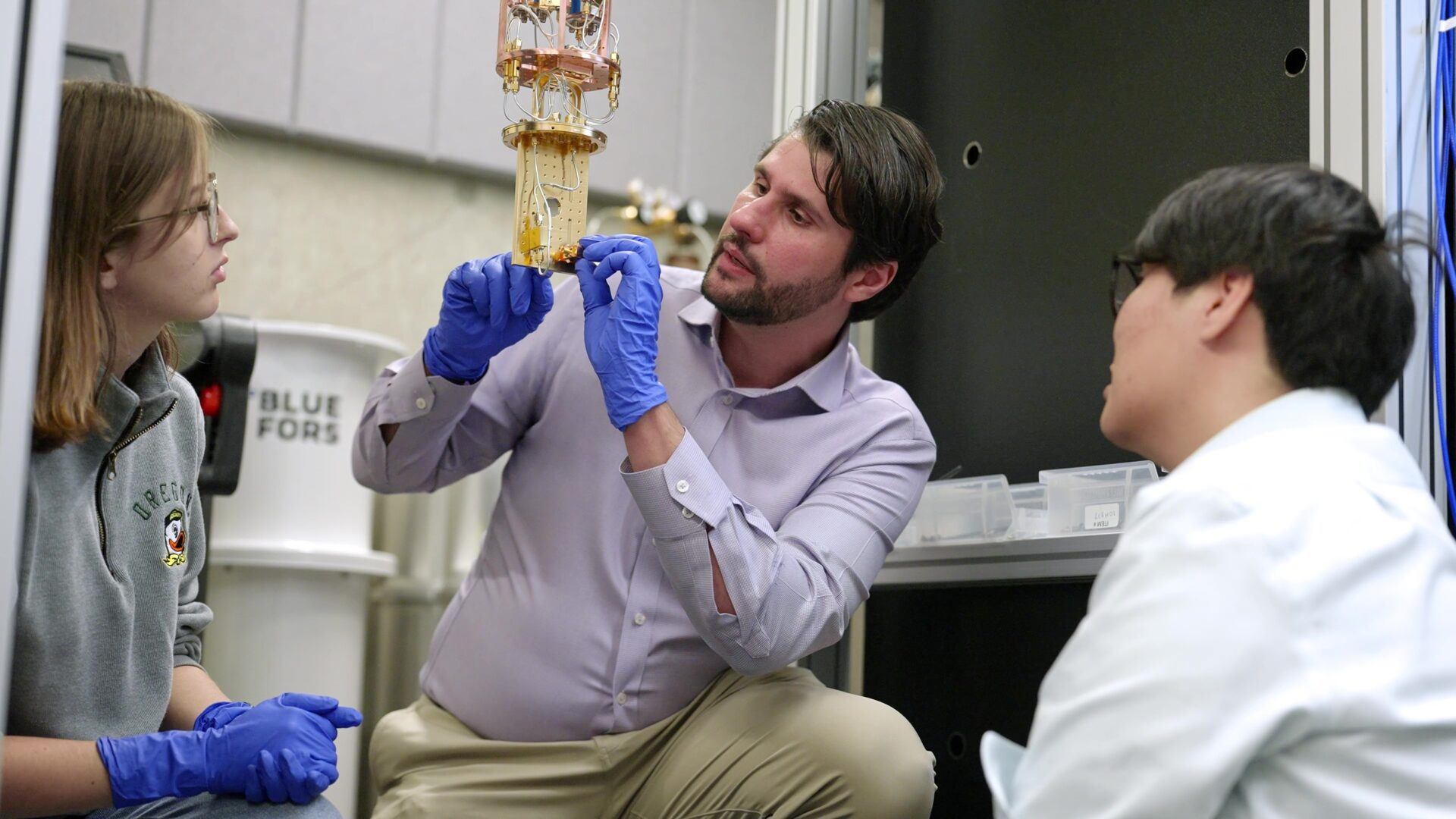
Quantum technology is a rapidly growing field, with advanced solutions being developed in quantum computing, sensing, and communication moving from research labs to real-world applications. As the quantum industry scales, one of the key bottlenecks it faces is a shortage of people with the hands-on experimental skills needed to build, operate, and maintain quantum hardware.
A Practical New Pathway into the Quantum Industry
The University of Oregon is tackling this talent shortage head on, with a newly launched Quantum and Nanotechnology track in its Applied Physics Master’s Program. Each student in the track enrolls in six specifically designed experimentally focused project-based core courses directed by Research Assistant Professor Nik Zhelev. It aims to fill a crucial competence gap with a practical new pathway into the quantum industry: “The usual route to working in the quantum industry is via a PhD,” explains Zhelev. “Our aim with this program is to provide an alternative route that focuses on hands-on experimental and practical skills.”
Zhelev has always valued the learning potential of practical experimentation. “Early in my undergraduate education I realized I was able to do experiments that really visualized quantum mechanics in the lab. Then I joined a lab where I got to work with cryogenics equipment, superconductors, and Josephson junctions. What gives me joy to this day is seeing the quantum behavior of macro-scale objects in the experiments we run – it’s a feeling you don’t get from textbooks or a computer.”
Outside of industry, opportunities for hands-on practical experimentation with cryogenic equipment have previously been almost exclusively available to students on the traditional PhD research program route. The problem is that this traditional academic route is no longer generating the volume or diversity of talent that the rapidly growing quantum field needs.
The quantum industry needs a broad workforce who can run experiments, maintain complex systems, troubleshoot equipment, and contribute to everyday lab operations. Many of these tasks don’t, or shouldn’t, require a PhD – but they do require hands-on experience with quantum hardware. The Master’s Program track in Quantum and Nanotechnology provides this experience, with access and exposure to real research-grade equipment and a curriculum focused on practical rather than theoretical learning.
Learning by Doing – with Cutting-edge Quantum Hardware
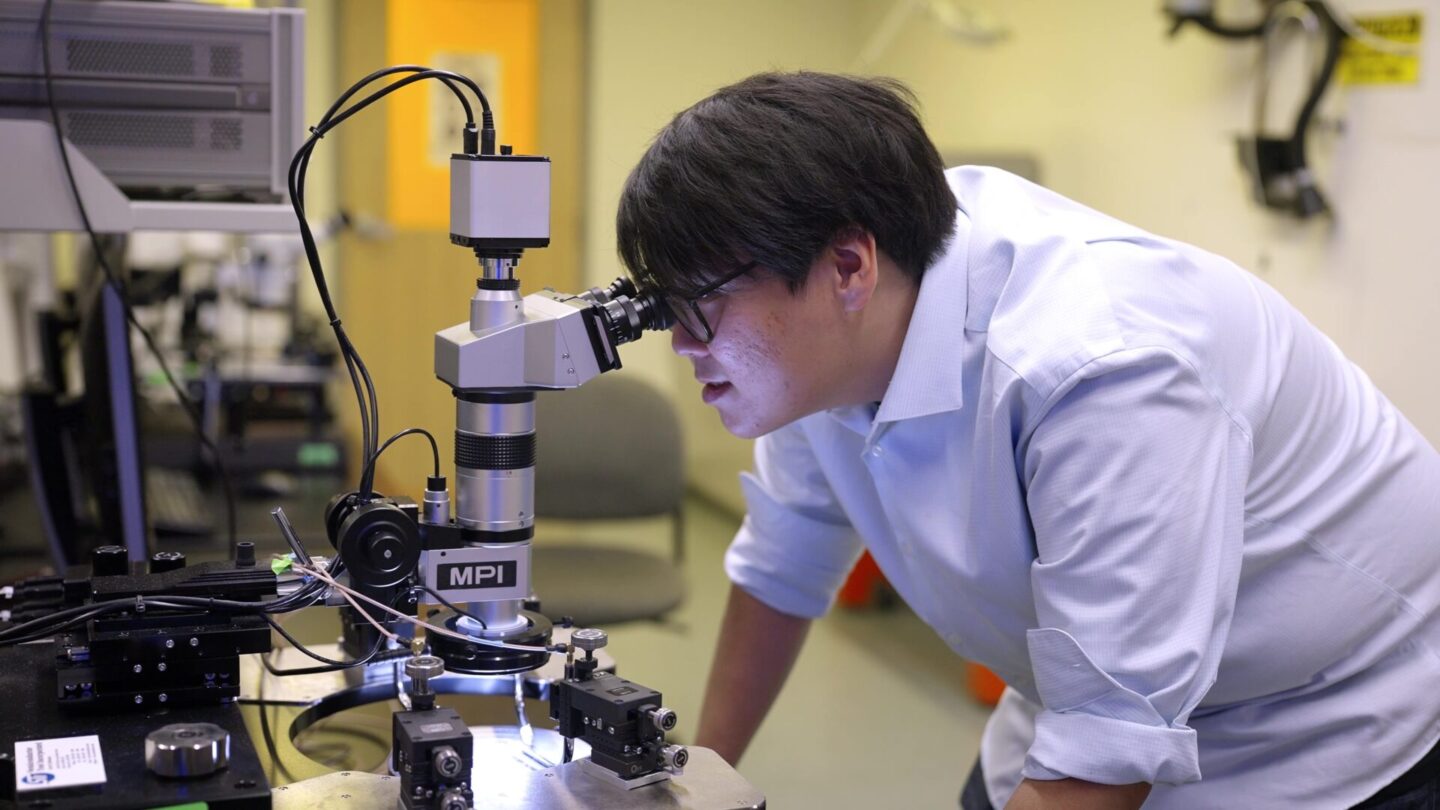
Research in Zhelev’s lab is focused on making microscale circuits behave as quantum objects. Zhelev and his students are trying to understand the physical origins of the defects that limit quantum coherence in superconducting qubits, then working out whether they can eliminate or at least mitigate the defects by tweaking the design of the qubits. To be able to research this, the lab needs to keep the microscale circuits in their quantum state for as long as possible.
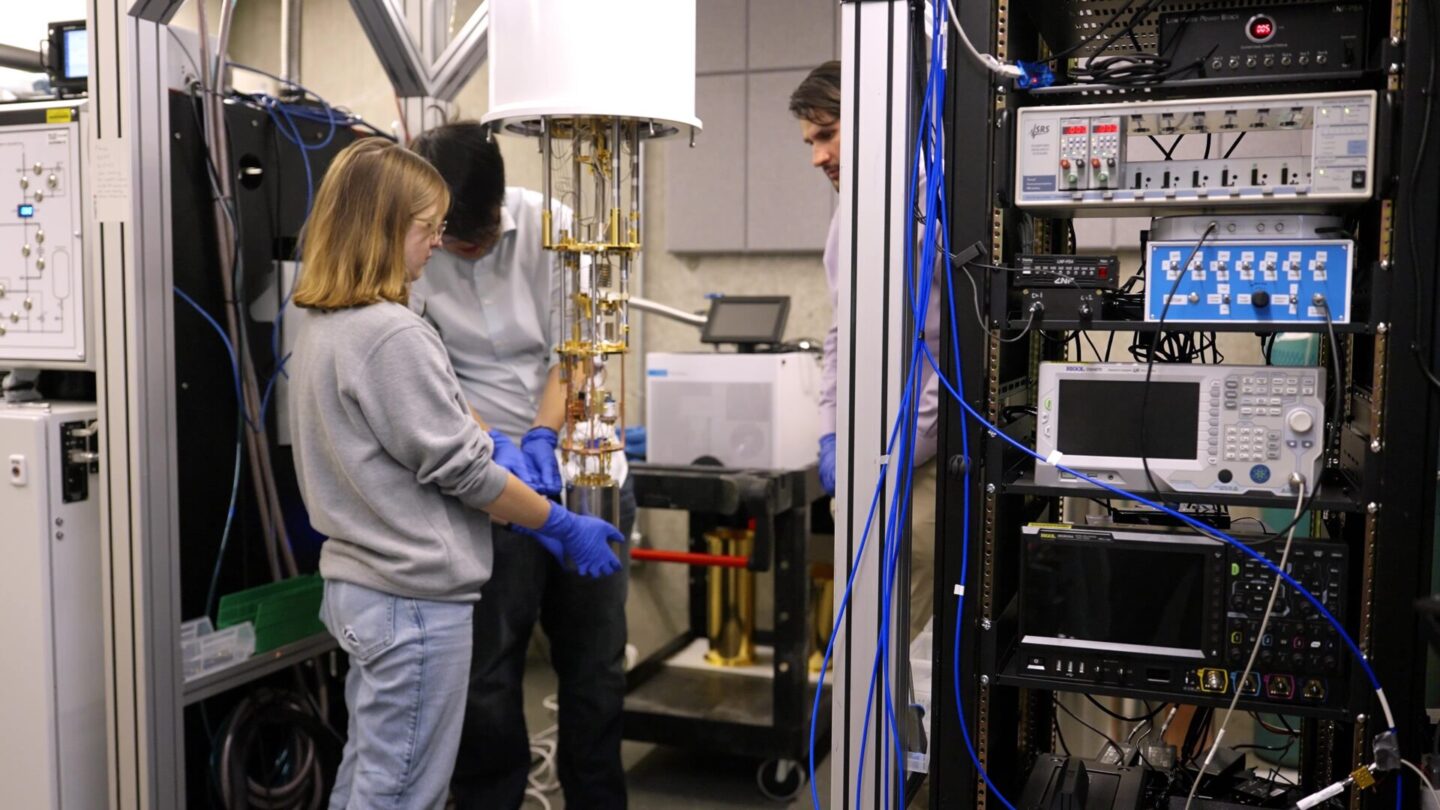
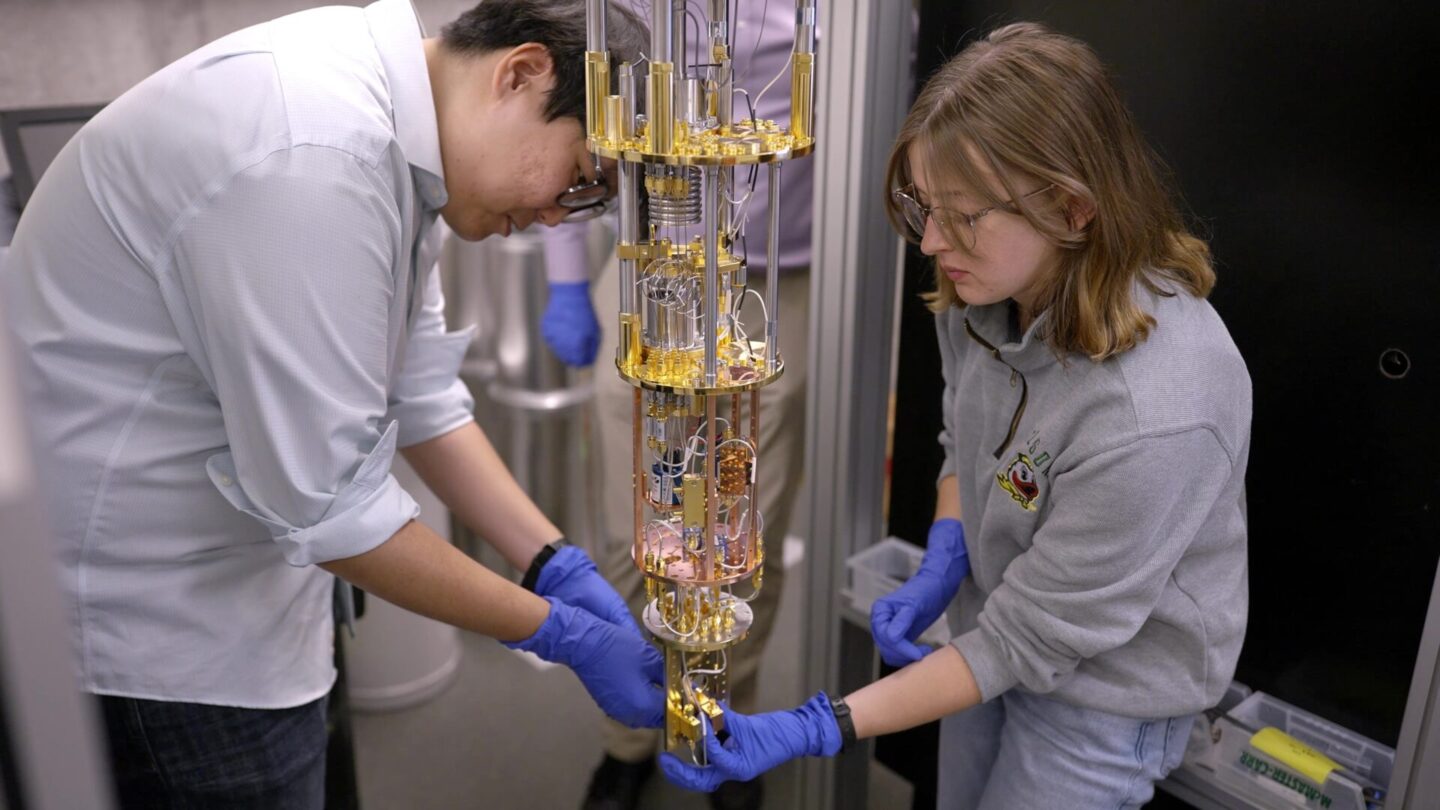
To do this, a cryogenic system is used. For the University of Oregon, this is based around a Bluefors Dilution Refrigerator – the first of its kind deployed on campus. Dilution refrigerators allows devices to be cooled to extremely low temperatures below 10 millikelvin, which is just above absolute zero and about 300 times colder than outer space. This creates a noise-free environment that is necessary for qubit operations.
“To make this program a success we needed a dedicated lab space with the type of equipment that students will encounter later on in their jobs,” explains Zhelev. “It’s not really been done before – it’s rare to have the opportunity to gain experience with this type of equipment outside of a PhD program.”
“We also wanted to complement the experimental equipment related to quantum technologies that we already have. So, alongside the equipment and labs we have for optics and quantum optics and photonic type systems, we wanted to add a place for students to get some hands-on experience with cryogenics and, most importantly, to demystify cryogenic measurements. We’ve turned the lab into a place where students can get comfortable with the type of equipment they’ll encounter at the current leading quantum computing companies when they graduate.”
When deciding on equipment, the lab team selected a Bluefors SD System because of its rapid, reliable cooldown, fast turnaround cycle, and ease of use – essential criteria for a student lab. “We needed a system that is easy to use with fast cooldown and turnaround cycles so students can interact with it frequently,” shares Zhelev. “For what we’re trying to do – which is get as many people as possible familiar with what’s inside the shields and vacuum can – this was the best system for our needs.”
The Quantum Technologists of the Future
The Master’s program has been designed to train students to deal with ambiguity and not be intimidated by complex equipment. Students will gain hands-on experience in:
- RF equipment, circuits, and transmission line theory
- Cryogenic techniques
- Optical systems and devices
- Nanofabrication equipment and chip fabrication
- Statistical methods and factorial analysis experiments
“Our goal is to deliver the essential skills that allow students to be familiar with the equipment, the types of experiments, and the types of measurement the industry is doing,” explains Zhelev. In the future, Zhelev also hopes to expand partnership with industry to give students more internship opportunities where they can put their training into practice.
The Master’s program’s new track soft launched in 2024 with four initial students. All four are already success stories for the program – and a ringing endorsement of its effectiveness.
“One of our initial students did an internship at the Air Force Research Lab in New York and is still working there after his graduation. Within six months of their internship, he presented original research at quantum computing conferences,” shares Zhelev. “Another student did an internship at Rigetti Computing in Fremont, California, quickly became a very valuable member of the team maintaining the quantum systems there and now works as a full-time cryogenic / RF engineer there. A third student made an impact in an internship in the Okinawa Institute of Science and Technology. Within three months, he was able to bring a previously outsourced nanofabrication process in-house, using skills developed on the course. The fourth student was hired as part of my group, and he’s been instrumental in scaling our setup so that we can do research measurements. He is now about to start a PhD program at University of Nevada-Reno, planning to continue working fabricating superconducting qubit devices.”
Thanks to the success of the soft launch, the Master’s program is now fully up and running, and expanded to 10 students in the subsequent year (students entering Fall 2025) and is expecting 11 new students this upcoming Fall. The students in the Fall 2025 cohort have already started their internships. While some of the students are following the footsteps of the students in the prior year’s cohort doing internships at Rigetti Computing and the Air Force Research Lab, students are also doing internships at Bluefors, Zero-Point Cryogenics, Pacific Northwest National Lab, the Quantronics group at the French Alternative and Atomic Energy Commission (CEA), and National Taiwan University.
The success of the program can be seen in the experience of Hayden Campbell, who joined Bluefors as a trainee in our Quantum team. The team conducts research into quantum measurement technologies and explores their applications to support research and product development. Building on the hands-on experience gained through the Quantum and Nanotechnology track, Hayden was able to contribute to experimental work shortly after arriving at Bluefors. Today, she is helping advance Bluefors’ quantum benchmarking capabilities through experimental measurements, data acquisition and analysis, and the development of measurement workflows that support future research, knowledge creation, and technology development.
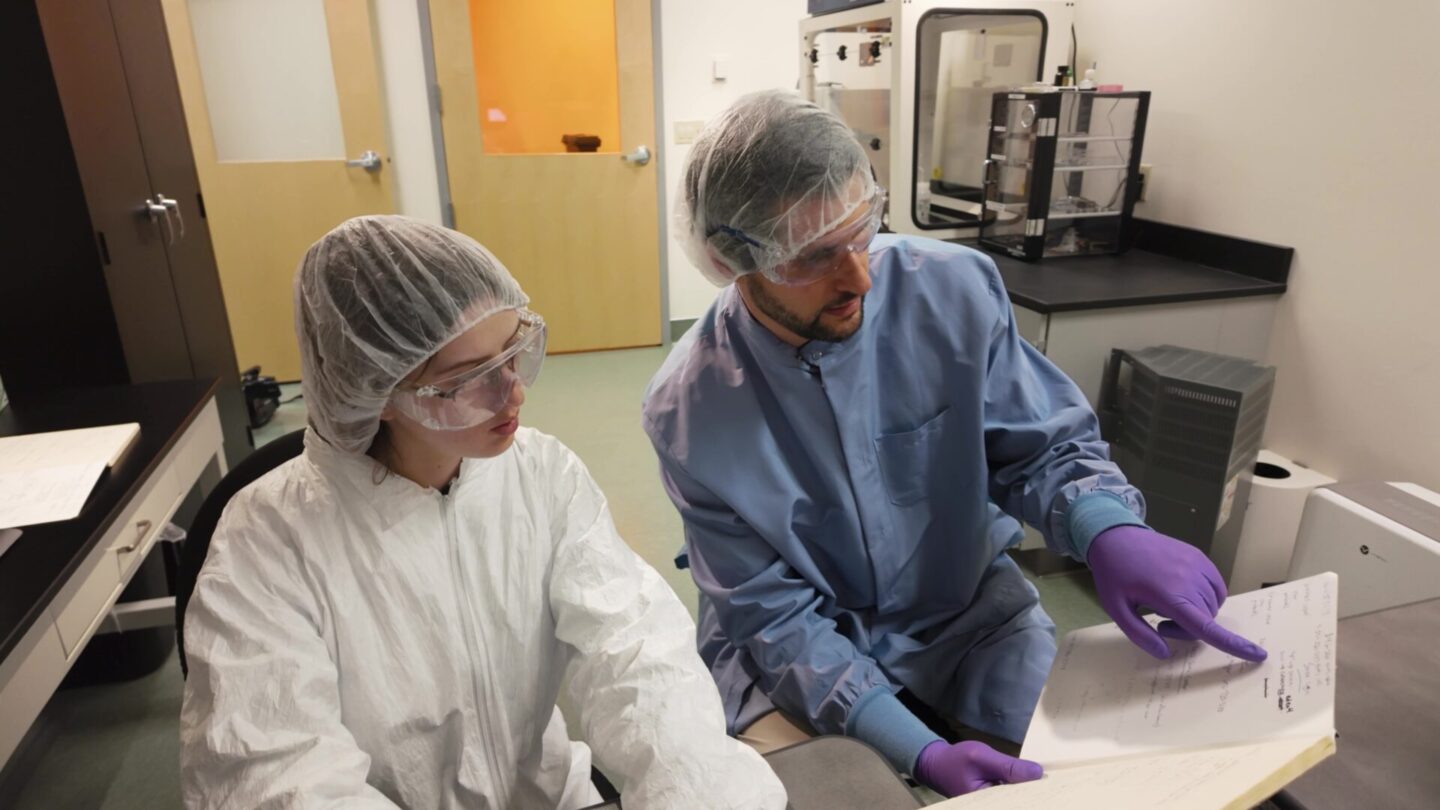
From Classroom Experience to Industry Excellence
The future of the quantum industry depends on having a broad spectrum of knowledgeable and experienced people to help it thrive. While there is currently a shortage of people with this experience, programs like the Applied Physics Master’s Program with its Quantum and Nanotechnology track will ensure that people are coming through with the skills needed – and there will be plenty of opportunities available for those that do.
“The pace of progress with quantum technology is so fast right now that it’s very hard to predict where things will be in five years,” explains Zhelev. “Because of that we will ensure our program offers a broad curriculum that exposes students to each type of qubit modality. This broadness will be a huge strength, because there are a lot of commonalities between the different ways to realize quantum systems and lots of ways in which a broad exposure can give the additional perspective that one day may lead to breakthroughs, whatever our future students end up specializing in.”
The quantum industry of the future will need to hire as many, if not more people without a PhD as those who have one – this program with its focused track and curriculum that brings students to the lab will help ensure those people have the skills needed. Zhelev invites stakeholders within the industry to reach out to him with any suggestions on refining the curriculum further to ensure it is well aligned with the type of skill set they need. Naturally, he is also keen to hear from prospective students too. As he points out, “The quantum industry is rapidly scaling up – for those with the right skill set it is a tremendous opportunity for extremely fast career growth.”
Find out more about Bluefors Dilution Refrigerator Measurement Systems and the University of Oregon’s Applied Physics Master’s Program in Quantum and Nanotechnology.