

Beyond Binary Quantum Computing: Exploring Higher-Dimensional Qudits
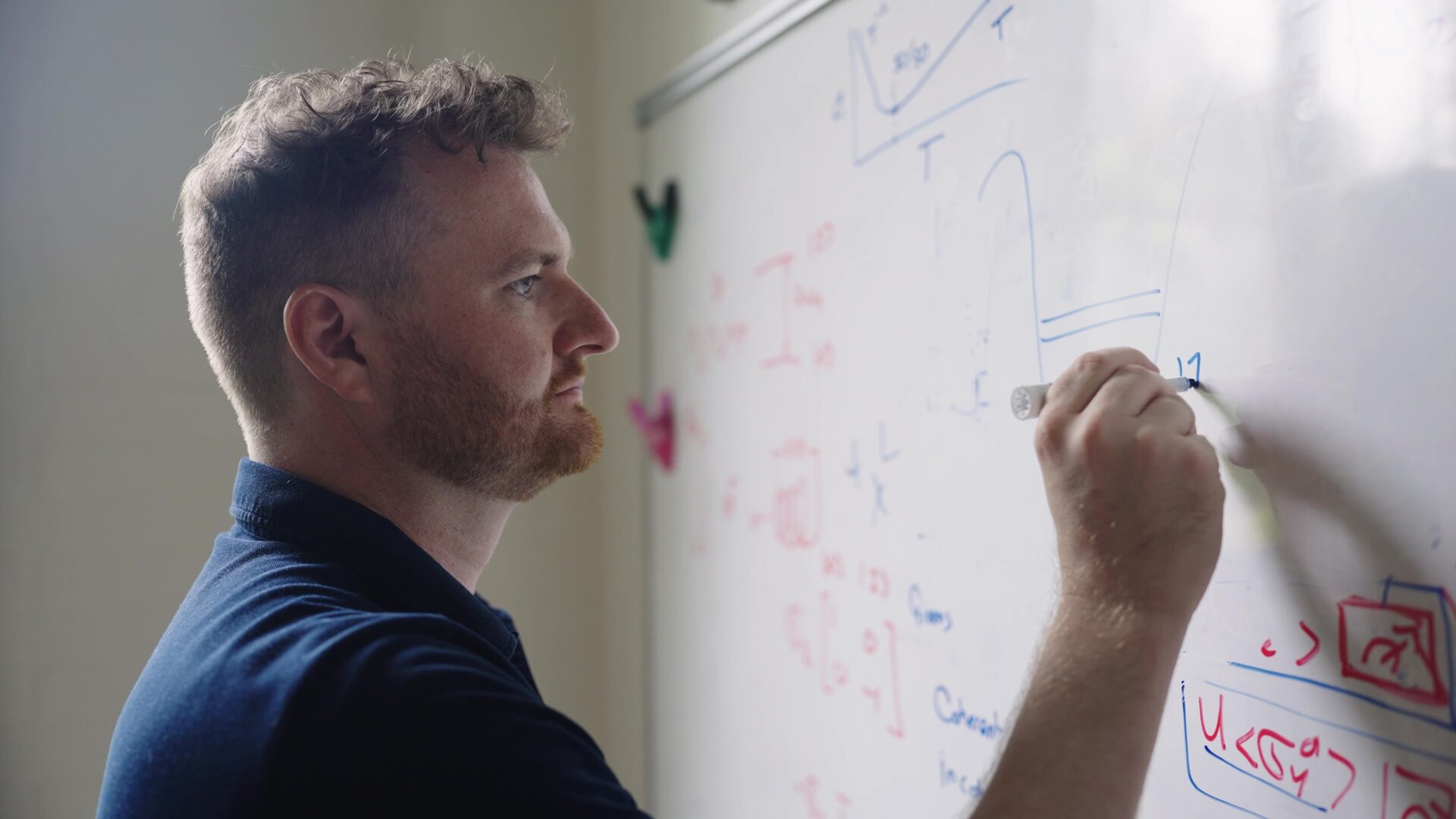
Quantum computing is often talked about in terms of qubits, the quantum equivalent of a classical binary bit. But what if the most efficient way to process quantum information is not always binary?
At the University of Rochester, Associate Professor of Physics Machiel Blok and his research group are exploring that question through work on superconducting qudits, quantum systems that can encode information across multiple energy levels instead of just two. Their research examines whether these higher-dimensional systems could provide advantages for quantum simulation, quantum error correction, and future quantum computing architectures by using more of the quantum states that already exist within the hardware itself.
Matching quantum hardware to the problems of nature
According to Machiel, one of the motivations behind qudit research comes from an observation about nature.
Many physical systems are not naturally binary. Atoms, molecules, vibrational modes, and quantum fields often contain multiple accessible states. If the systems that researchers want to simulate are inherently multi-level, it may be advantageous to use a quantum processor that reflects that structure.
The Rochester team studies superconducting circuits similar to those used throughout the quantum computing industry. Instead of using only two energy states as a qubit, they investigate how additional states can be accessed, controlled, and used for computation.
Their goal is not necessarily to replace qubits, but to understand when higher-dimensional quantum systems may provide a more efficient way to represent information and solve a problem.
A promising path for quantum simulation
One area where qudits may offer an advantage is quantum simulation.
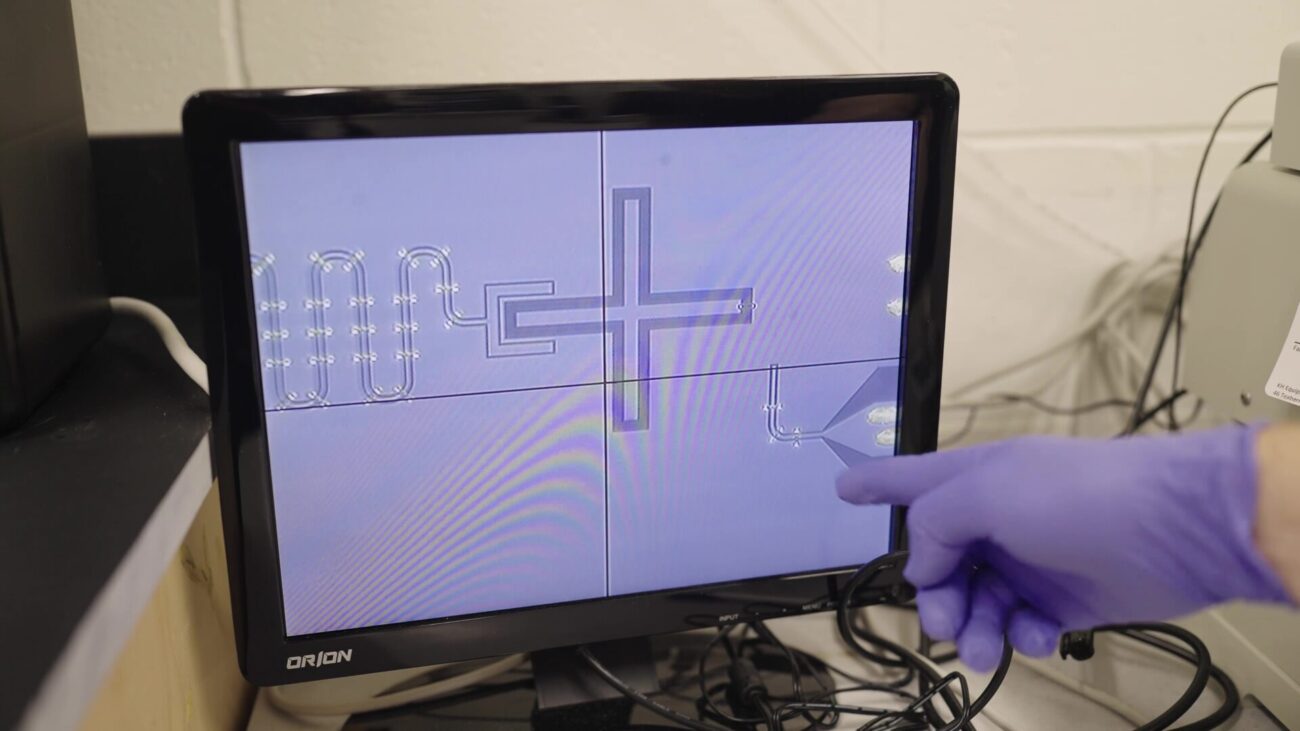
Machiel’s team is especially interested in applications such as quantum chemistry and quantum field theory, where the systems being modeled naturally contain multiple states and degrees of freedom. Instead of forcing those systems into a binary representation, qudits might allow researchers to represent them more directly. According to Machiel, a simulator that reflects this structure could offer a more natural and potentially more efficient way to study these problems.
The group’s long-term vision is to build quantum simulators that match the dimensionality of the problem they are studying. Such an approach could ultimately enable more efficient simulations of molecules, materials, and fundamental physical systems that remain difficult for classical computers to model.
“The holy grail of qudit research would be to build a simulator that maps the dimension of the information to the problem in nature, and then solves a problem that we actually care about. The killer applications that I can think of are problems in quantum field theory or quantum chemistry that we solve with a qudit simulator, and solve more efficiently than any classical computer could,” Machiel says.
Beyond simulation, the group is exploring whether higher-dimensional quantum systems could support more efficient approaches to quantum error correction—one of the key challenges on the path toward large-scale fault-tolerant quantum computing. The same hardware might ultimately contribute to multiple research directions, helping scientists to understand how to both build better quantum processors and use them more effectively.
The work also raises deeper scientific questions: How much information can realistically be stored and controlled within a single quantum system? How does entanglement behave in higher dimensions? And what new physics emerges when researchers move beyond the binary framework that has defined much of quantum computing so far?
These questions continue to drive research in Rochester and across the growing qudit community.
Engineering new methods of quantum control
Qudit research requires more than theoretical ideas. It also demands precise control over increasingly complex quantum systems.
Machiel describes much of the group’s work as a series of engineering and scientific advances that build upon existing superconducting quantum hardware. As researchers move from qubits to higher-dimensional qudits, every additional energy level introduces new complexity, so they must determine how information moves between states, how noise affects higher energy levels, and how to precisely control the system without disturbing the rest of the quantum processor. This includes understanding multi-level dynamics, developing new control techniques, controlling multiple transitions simultaneously, and characterizing how noise affects increasingly complex quantum states.
To help explain the difference between qubit and qudit architectures, Machiel compares quantum computing to city planning. A qubit-based architecture resembles a sprawling, low-rise city made up of many smaller buildings, while a qudit-based architecture resembles a dense, high-rise skyline of taller buildings that can accommodate more information in the same footprint. The job of a quantum engineer is similar to the job of a city planner, trying to efficiently engineer the movement of people/information throughout the “city” and, in the case of qudits, also between the different “floors” within the buildings.
“One big step that we made was coming up with a way to efficiently control a single qudit. Previously, control meant moving information between adjacent energy levels. That’s not very efficient because you’re effectively moving one floor at a time. We came up with a new method that essentially drives all these transitions at the same time, and that was a much more efficient way to control qudits,” Machiel says.
The approach draws inspiration from concepts in spin physics, and allows researchers to manipulate complex quantum states more efficiently than conventional level-by-level control methods. Every increase in dimensionality also reveals new aspects of how quantum information behaves and provides insight into whether qudits can ultimately become practical tools for quantum simulation, error correction, and future quantum computing architectures. For Machiel, understanding where these opportunities and limits lie is as important as technological progress itself.
Reliable cryogenics for fast-moving research
Like many superconducting quantum experiments, qudit research relies on millikelvin temperatures.
For Machiel’s team, the challenge is not in achieving those temperatures. Researchers also need reliable operation, fast turnaround between experiments, and confidence that the cryogenic platform will consistently deliver the conditions required for high-quality measurements.
“Achieving the low temperatures for us is absolutely crucial,” says Machiel. “We need our chips to go superconducting, and we need our circuits to go to the ground state before we can start climbing this ladder of highly excited states.”
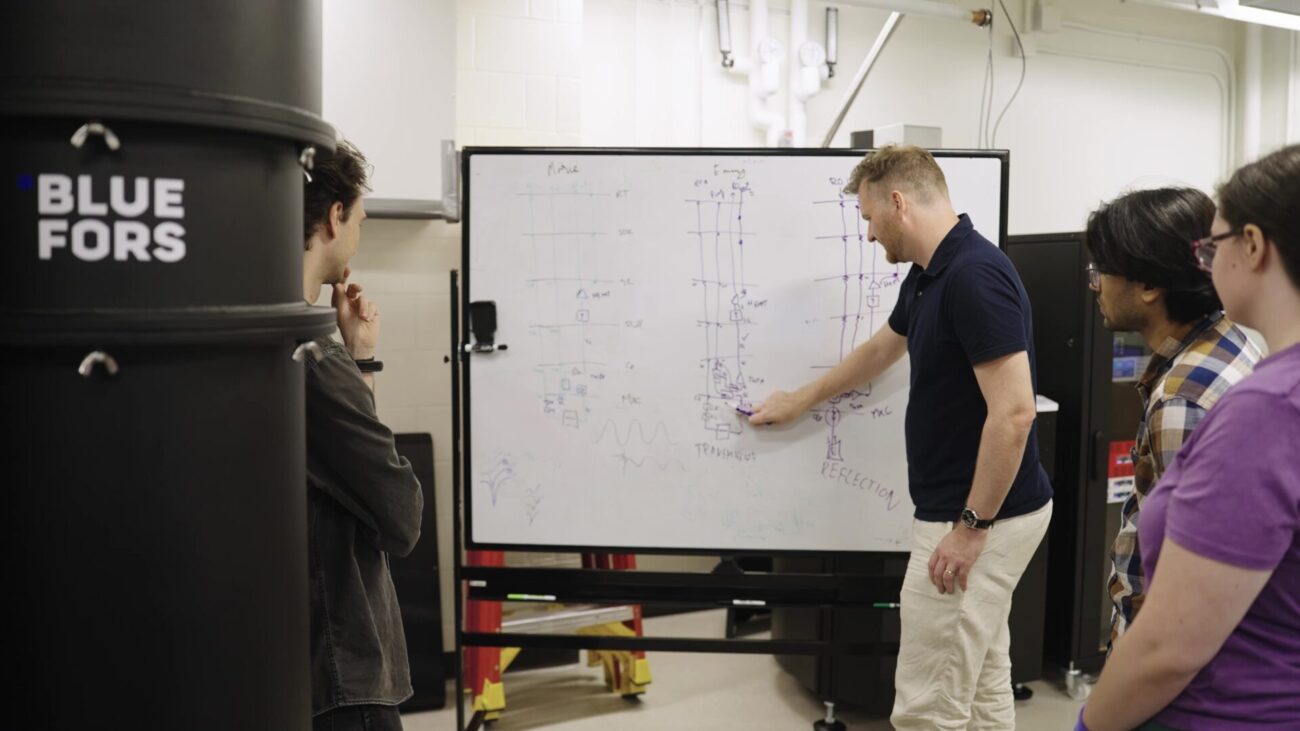
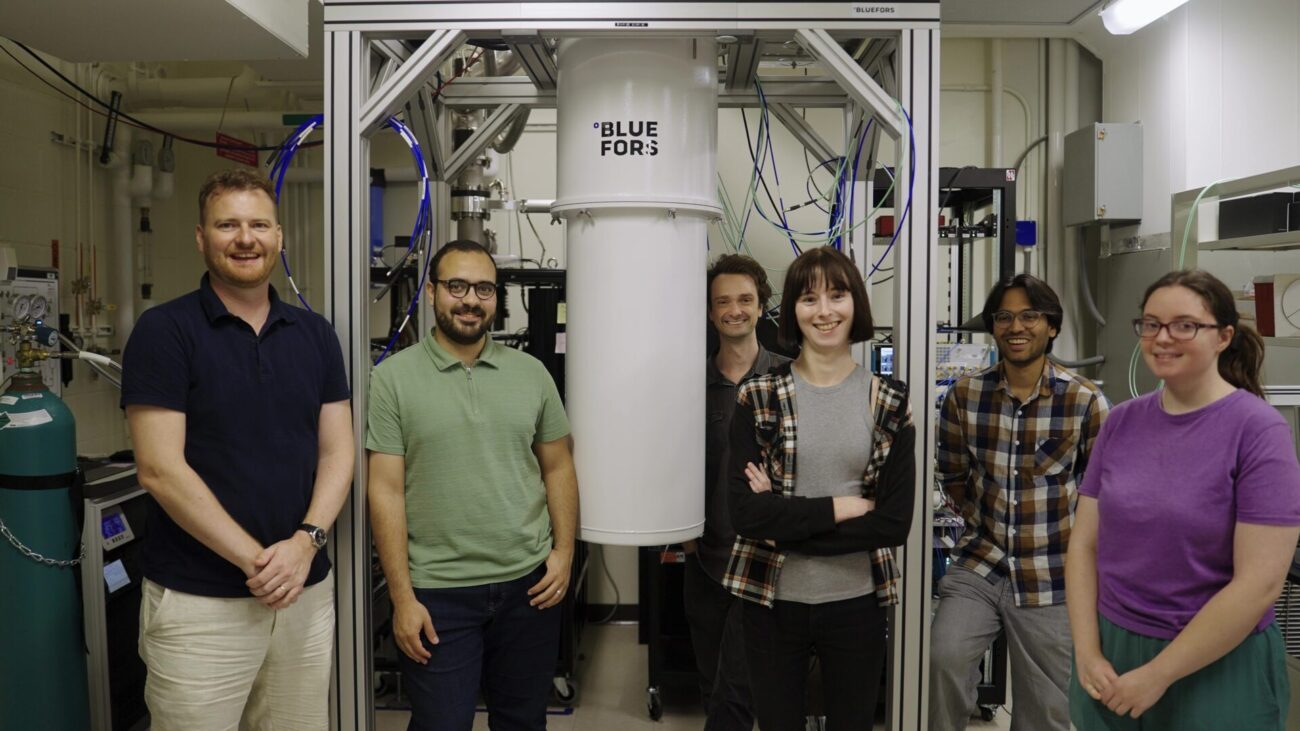
The group depends on Bluefors cryogenic technology as part of its experimental infrastructure. According to Machiel, Bluefors’ reliable cooldowns and faster experimental cycles allow researchers to focus less on operating the cryogenic system and more on the science itself.
The compact footprint of their Bluefors Ultra-Compact LD System also addresses a practical challenge faced by many university laboratories with limited space. The smaller system footprint creates opportunities to add experimental capacity without requiring additional laboratory space.
“The compact system leaves more space for everything else. I can now dream of putting three, maybe even four dilution refrigerators in my lab. That really matters when space comes at a premium.”
Engaging the next generation of quantum researchers
Beyond advancing quantum science, education is a major focus for Machiel and the Rochester quantum community.
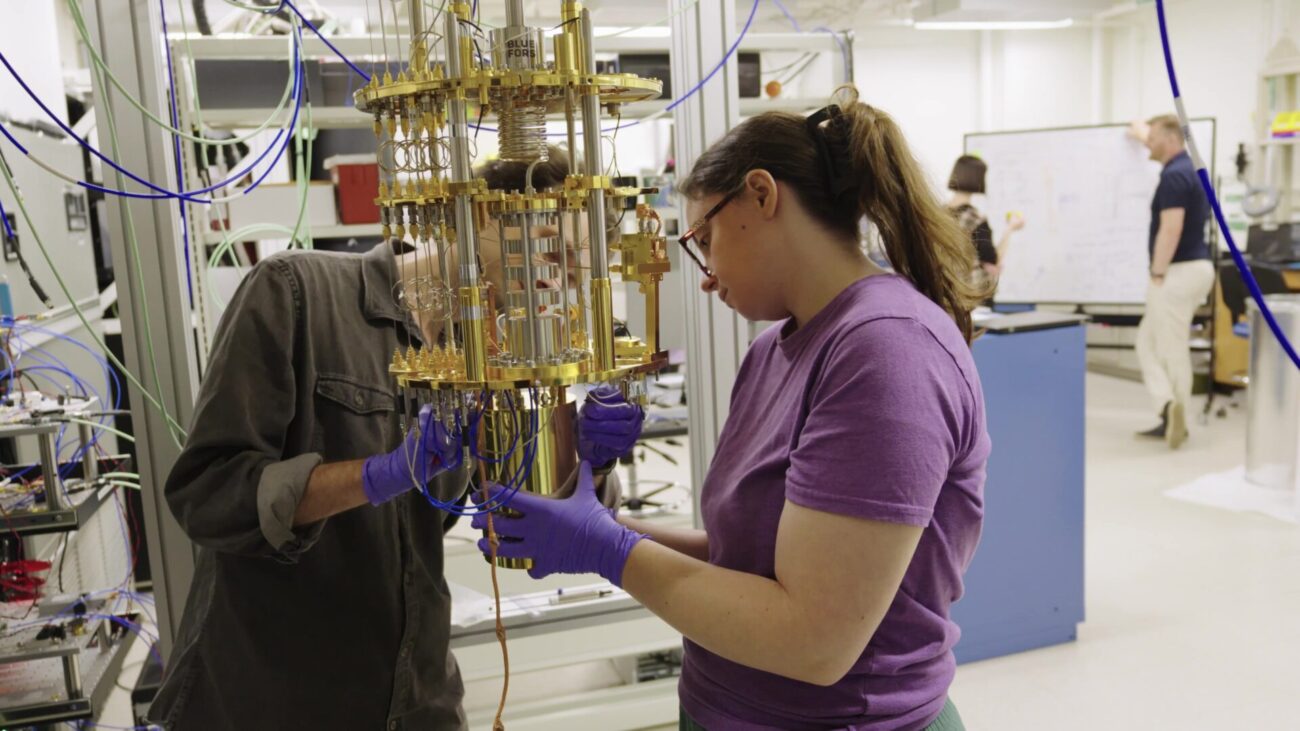
Blok Lab currently includes a team of PhD researchers working alongside undergraduate students who are taking their first steps into experimental quantum science. For many of these students, working in the lab provides their first opportunity to interact directly with quantum systems rather than learning about them only through lectures and textbooks.
That experience reflects a philosophy that Machiel traces back to his own education. As a student, a mentor once showed him how a single quantum spin could be controlled by manually operating control knobs of the experimental setup, transforming an abstract concept into something tangible and real. Today, he seeks to create similar moments for the students entering his laboratory.
“We try to engage them as much in the research as we can,” Machiel explains. “Give students a chance to see these quantum systems, touch them, design them, engineer them, and work with them.”
The emphasis on collaboration extends beyond the laboratory itself. Rochester’s recently established Center for Coherence and Quantum Science brings together researchers from physics, optics, chemistry, engineering, and other disciplines to address common challenges in quantum science. The center builds on a long tradition of quantum optics and quantum information research at Rochester while creating new opportunities for collaboration across fields.
For students, this interdisciplinary environment means exposure to a wide range of quantum technologies and research directions. A student studying superconducting circuits can interact with researchers working on spin qubits, quantum optics, quantum chemistry, and quantum theory, gaining a broader understanding of the field and the many paths it may take in the future.
The university also supports undergraduate participation through research programs that bring students into quantum laboratories early in their academic careers. These opportunities provide hands-on experience with quantum hardware and help prepare the workforce needed to support both future scientific discovery and the growing quantum technology sector.
“When I came in as an undergraduate student, there wasn’t really a quantum industry. We knew we were acquiring skills that would become useful in industry, but I was thinking about classical microwave engineering companies or nanofabrication for the chips industry. Seeing companies and startups seriously taking quantum technology and employing people with quantum PhDs and undergraduate degrees has been really inspiring for me,” Machiel says.
More than a binary quantum future
For Machiel, the future of quantum computing is unlikely to be defined by a single winning architecture.
Instead, different approaches can coexist, with qubits, qudits, and hybrid systems each playing a role depending on the application. The key question is how quantum information can be represented most effectively for a given problem.
As quantum computing continues to mature, research such as that taking place at the University of Rochester helps expand the concept of what a quantum processor can be and how quantum information is used. By exploring techniques beyond binary systems, researchers are opening new possibilities for simulation, error correction, and our understanding of quantum mechanics itself.
Learn more about the research of Blok Lab and about Bluefors dilution refrigerators.